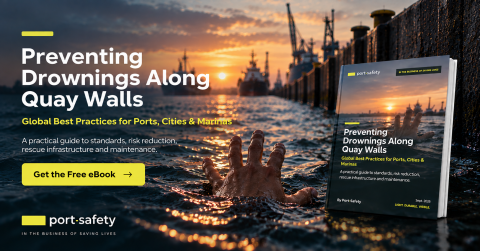
Would Your Quay Wall Be Safe If Someone Fell Into the Water Tonight?
A rescue ladder is only useful if a person in the water can find it, reach it and climb to safety.
Yet along many waterfronts, critical rescue infrastructure can be difficult to see, difficult to reach, poorly maintained — or simply not designed as part of a complete self-rescue route.
As ports, cities and marinas become increasingly integrated with public spaces, more people are exposed to the water. At the same time, waterfront safety equipment must withstand harsh conditions including saltwater, corrosion, vessel impact, waves and tidal currents.
Introducing our new eBook: Preventing Drownings Along Quay Walls-Global Best Practices for Ports, Cities & Marinas
Drawing on Port-Safety’s experience from waterfront projects across multiple countries, this practical guide looks beyond simply asking “Do we have rescue ladders?” Instead, it asks the more important question:
“Would the ladder still work if someone needed it tonight?”
The eBook explores the key elements of effective waterfront safety, including:
- Self-rescue: how a person in the water can find and reach an escape route
- Visibility: why rescue equipment must be easy to identify, especially in low-light conditions
- International standards: common principles around accessibility, spacing, climbing and inspection
- Rescue infrastructure: how ladders, handholds, grablines and rescue stations work together
- Maintenance & durability: the hidden risks of corrosion, impact and material degradation
- Safety & sustainability: looking beyond purchase price to lifetime performance and total cost of ownership
- A practical self-assessment checklist to help identify potential gaps in your quay wall safety.
Is your waterfront ready?
Whether you are responsible for safety, maintenance, engineering, operations or asset management, this guide provides practical considerations to help you evaluate and strengthen your waterfront safety strategy.
Want to read the full guide? Request here and we’ll send you a free copy. https://port-safety.com/en/press/ebook/
Latest News & Events
News from IHMA Commercial Members Port-Safety.
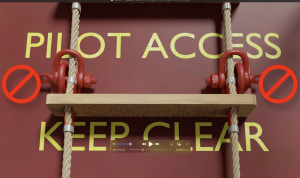
We help organisations with pilot ladder compliance and training using innovative technology-based solutions